


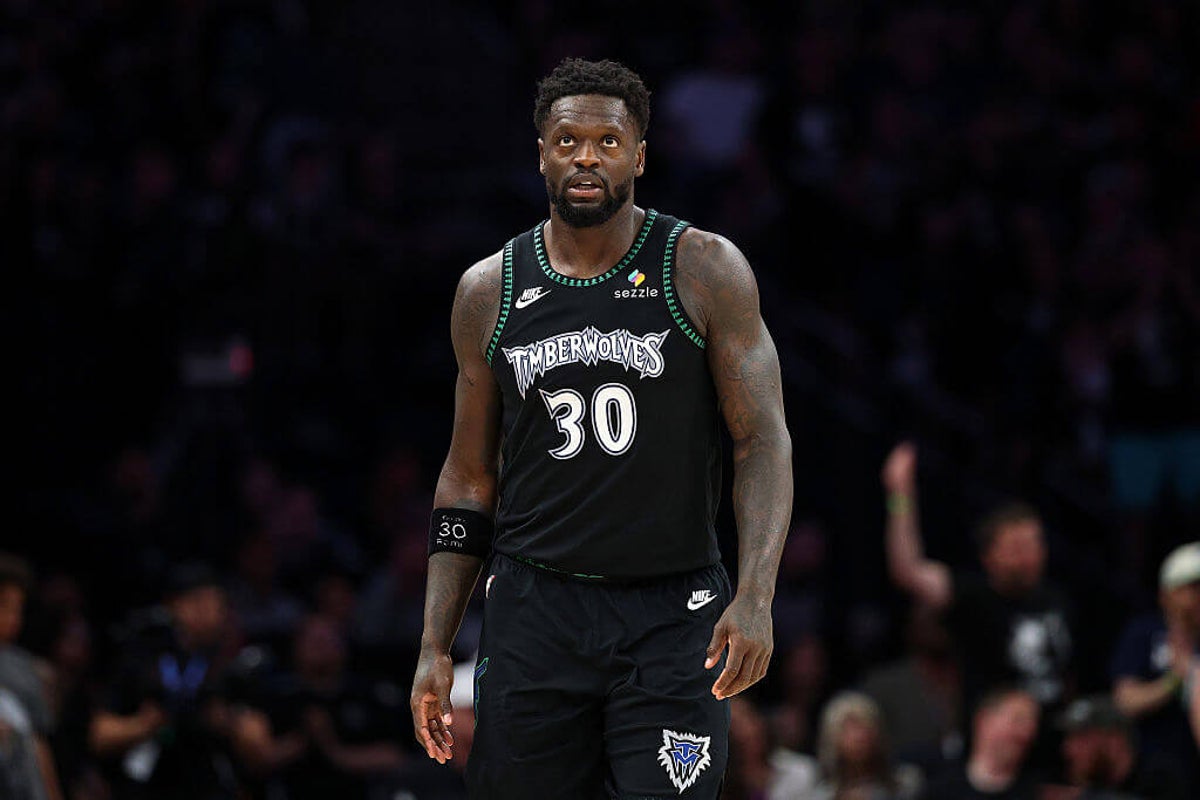
In a three-team trade, the Minnesota Timberwolves will trade forward Julius Randle to the Brooklyn Nets, a team source confirmed to The Athletic. Randle averaged 20.0 points during his two seasons with Minnesota, but he shot only 39 percent during the 2026 playoffs. Minnesota will acquire the 33rd overall pick from Brooklyn in the deal. Center Nic Claxton is expected to join the Bulls. ESPN was first to report the deal.
Wolves flesh out frontcourt
The biggest takeaway from this move is that it is a full-throated endorsement of the potential of Jaden McDaniels and Naz Reid. The two Timberwolves mainstays will now be thrust into more prominent roles than they have ever had since entering the league.
Reid will be full-time starting power forward in Minnesota for the first time in his career, team sources told The Athletic. The former Sixth Man of the Year has been a cult hero in the Twin Cities ever since he came into the league as an undrafted rookie in 2019. He is supremely skilled as a shooter and scorer, especially for a person his size. Now he will have to show that he can defend at a high level, night after night. Reid has played well next to Rudy Gobert when given the chance, and his ability to stretch the floor should help the spacing on offense.
McDaniels now elevates to Anthony Edwards’ co-star. He took major strides on offense in his sixth season, averaging 14.8 points and shooting 41 percent from 3-point range. He sometimes struggled to find shots with both Edwards and Randle on the floor with him. With Randle now in Brooklyn, McDaniels will slide into that No. 2 role and get a much bigger diet of shooting and playmaking opportunities. He had a breakout series against Denver in the playoffs, but like Reid, the Wolves will be looking for more two-way consistency from him going forward.
Minnesota clears cap space
In salary dumping Randle to Brooklyn, the Wolves clear Randle’s $33 million salary from the books, which will give them all the spending power they need to re-sign guard Ayo Dosunmu and open up access to the full mid-level exception to add another quality player. Dosunmu came to Minnesota in a February trade and fit in very well, including a 43-point explosion in the playoffs against Denver. The Wolves could not afford to lose him in free agency, given their need for ballhandling guards and the price they paid to get him from Chicago, so this gives them all the breathing room they need to bring him back and add another veteran on the free agent market.
They will, however, face scrutiny for their asset management. Two years ago, the Wolves traded franchise centerpiece Karl-Anthony Towns to New York for Randle, Donte DiVincenzo and a first-round pick. Randle was a big part of their playoff victories over the Lakers and Warriors in 2025, but he struggled mightily in this year’s playoffs against the San Antonio Spurs, so much so that the Wolves needed to attach a first-round pick to off load him. Meanwhile, Towns is the toast of New York after helping lead the Knicks to their first championship in 53 years, and DiVincenzo likely won’t be available until late next season because of a torn Achilles tendon. Joan Beringer, the player the Wolves chose with the first-round pick they got from the Knicks, better be good.
How does this impact Brooklyn, Chicago?
Brooklyn isn’t necessarily affected by the league’s new anti-tanking rules since the Nets don’t control their own pick anyway (Houston has swap rights), but the Nets used $10 million of their cap room to upgrade the front court by swapping Nic Claxton for Julius Randle, and also moved up five spots in the draft in the process.
While the Bulls are the big winners here, getting Nic Claxton into their own cap room essentially for free (league rules will require them to include some nominal bit of compensation, such as cash or a top-55 protected second-round pick), Brooklyn’s move is perhaps more notable because it portends a pivot toward competing for one of the league’s most egregious tankers a year ago. Randle also has a $35.8 million player option after the season, so he’s possibly a rental; Brooklyn’s two biggest stars and highest-paid players, Randle and Michael Porter, Jr., are now both potential unrestricted free agents after the season.
Brooklyn could add at least $1.7 million to the trade by sending a small salary to a third team and generate $10 million more in cap space, because the Nets could use all their cap space first and then execute the Randle trade with Claxton and the other small contract as matching salary. Malachi Smith (due $2.15 million if his nonguaranteed team option is picked up and utterly fungible basketball-wise) would seem a perfect candidate for this maneuver.
Minnesota will generate a mammoth $33 million trade exception that it might not ever use, but also gave itself enough wiggle room blow the luxury tax line to re-sign Ayo Dosunmu, use the nontaxpayer middle exception on forward to replace Randle, and possibly make other maneuvers while still skirting the tax. The trade will need to completed after the July 6 moratorium, which allows time to potentially add more pieces to it.

