


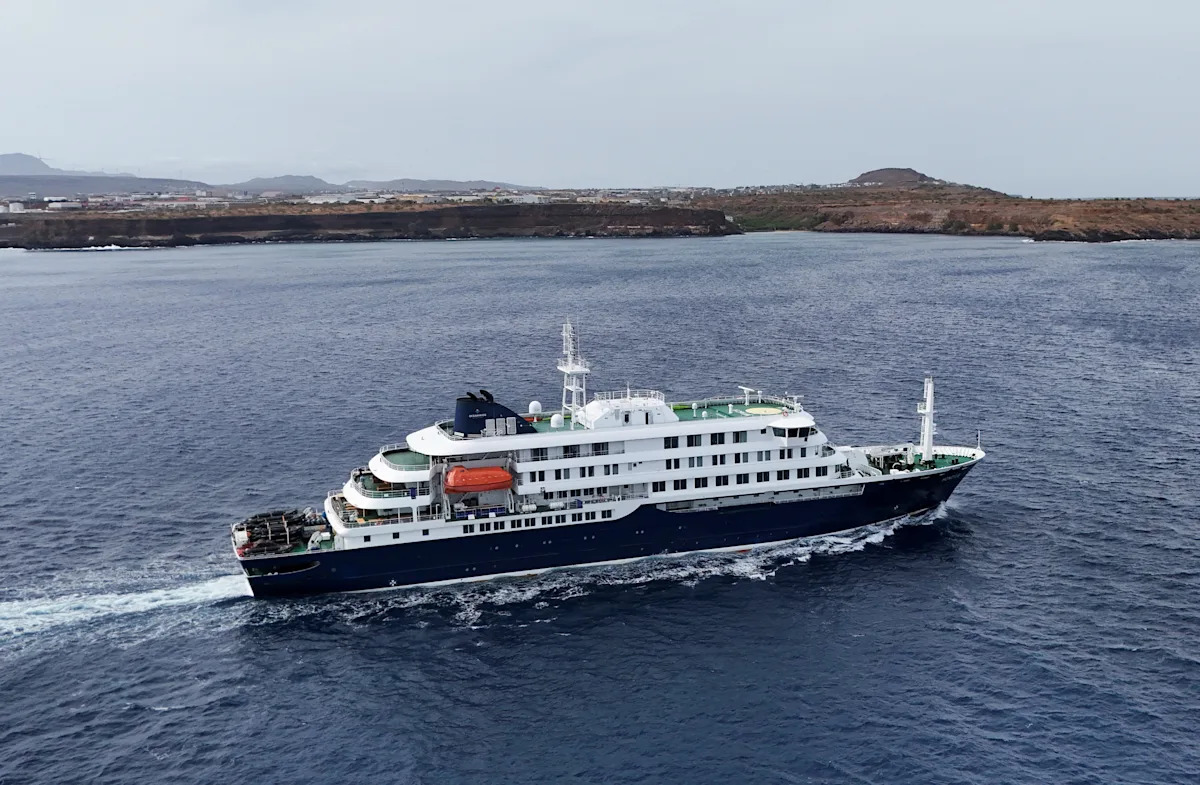
People in three U.S. states are reportedly being monitored for potential hantavirus infections after traveling on a cruise ship at the center of a deadly hantavirus outbreak.
Three people – a Dutch couple and a German national – died in the outbreak on the MV Hondius. In all, eight people, including a Swiss citizen, are suspected to have contracted the virus. The number of confirmed cases has risen to five, the World Health Organization (WHO) said on Wednesday.
The cruise company said 29 passengers had left the ship on April 24, after the first fatality on board.
On Wednesday, the Centers for Disease Control and Prevention said that US travelers were being monitored, but that the risk to the American public was extremely low at the time.
According to The New York Times, people in three U.S. states – California, Georgia and Arizona – were being monitored for possible infections, though none had shown signs of illness.
The Georgia Department of Public Health said it was monitoring two residents who had returned home after disembarking from the cruise ship, according to Reuters. Arizona health officials were checking one individual. None were showing any signs of infection.
So far, one of the five confirmed cases of hantavirus has died. The deaths of the other two have not been confirmed to be from the virus. Two of the confirmed cases were among the three patients evacuated to the Netherlands on Wednesday to receive medical care.
The third evacuated patient has no symptoms, but was “closely associated” with a passenger who died on May 2 and is being tested.
Officials are trying to track down passengers who left the ship before the outbreak was reported.
Dutch officials said around 40 passengers had disembarked in St. Helena. The whereabouts of many of these passengers is as yet unknown. One French citizen had been in contact with a person who had fallen ill, but was not showing symptoms.
The cruise ship has been cleared to continue its voyage and has departed Cape Verde for Spain’s Canary Islands, which will take three to four days, according to Oceanwide Expeditions. Despite opposition from local officials, Spain’s health minister has doubled down on the plan for the ship to dock on the island of Tenerife.
Hantavirus is typically passed from rodents to humans through feces, saliva or urine. It can cause severe respiratory illness and can be fatal. Human-to-human transmission is rare. In the three confirmed cases on the cruise ship, the patients tested positive for the Andes strain, which can be transmitted among people.

