


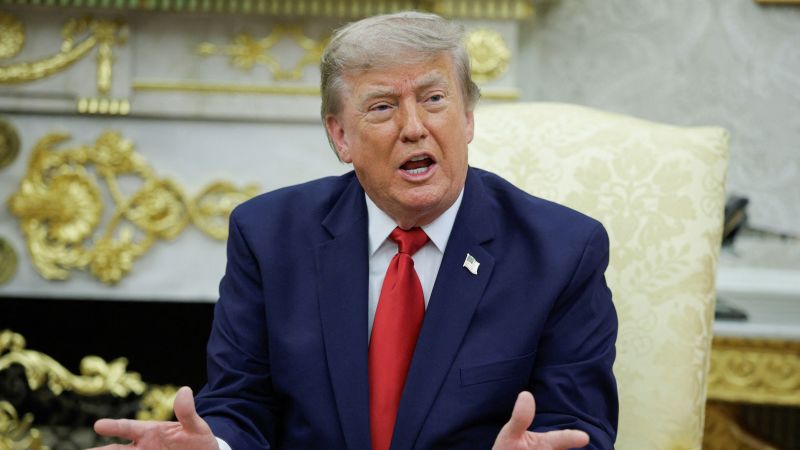

US President Donald Trump renewed his threat yesterday to strike bridges and power plants in Iran unless Tehran returns to the negotiating table.
“Next week it gets really bad for them, because next week comes the power plants. Next week comes the bridges,” Trump told Fox News. He also said Tehran should make a deal otherwise they’re “not going to have anybody left.”
The US president has made similar threats before, issuing in April a stark warning to Iran, saying “a whole civilization will die tonight” as a US-imposed deadline approached for Iran to open the Strait of Hormuz.
But what do experts say about the legality of hitting power sites and bridges?
Retired Brigadier Gen. Mark Kimmitt told CNN that “bridges and infrastructure that are primarily being used to support military forces are legitimate military targets,” adding that he “didn’t hear anything about civilian infrastructure” in Trump’s comments.
“Let’s hope we’re going to stay focused on the military targets,” Kimmit added.
Amid previous threats from Trump to hit Iranian power plants, legal expert Craig Jones, a senior lecturer at the UK’s Newcastle University, told CNN there are two key questions to consider: Does such action have a “concrete and direct” military advantage? And if so, is this advantage proportionate to the harm inflicted on civilians and the environment?
Even if there is a legitimate military advantage to be gained, Jones said that doesn’t mean the action necessarily meets the “threshold for proportionality,” which requires impact on civilians to be considered.
Other experts expressed similar concerns.
Heba Morayef, regional director for the Middle East and North Africa at Amnesty International, said earlier this year the potential for “devastating” civilian harm arising from strikes on energy infrastructure means there is a “substantial risk such attacks would violate international humanitarian law and in some cases could amount to war crimes.”
In March, Ben Saul, UN special rapporteur on counterterrorism and human rights, condemned both US and Iranian threats to target civilian energy infrastructure. He said such attacks, if carried out, would constitute “war crimes under international law.”

