


Since Donald Trump’s first term, they have been viewed comfortingly as the “adults in the room,” a last line of defense against the impulsive whims of a president with access to the nuclear codes.
Now – after an unprecedented wave of firings that has been compared by some to Stalin’s purges – the Pentagon top brass no longer seem like such a reliable bulwark.
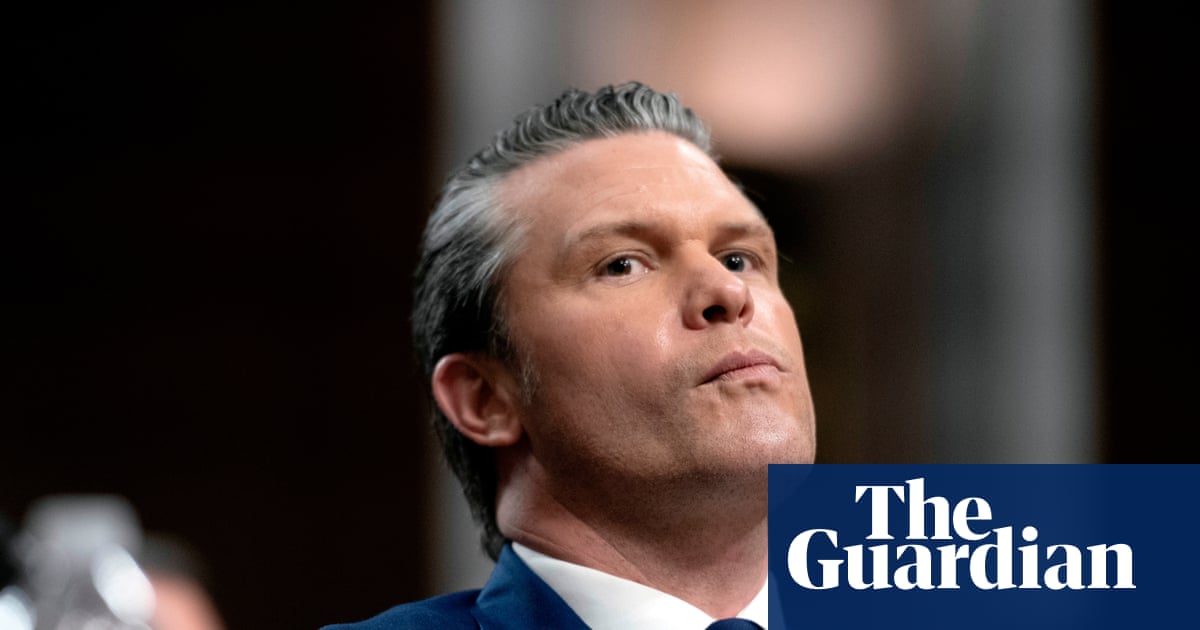
Since Trump returned to office in January last year, Pete Hegseth, the rumbustious defense secretary who has made it his mission to remake a military ethos he denounced as “woke”, has fired or forcibly retired 24 generals and senior commanders, with no performance-related reason given.
About 60% have been Black or female, an approach seemingly driven by the administration’s proclaimed onslaught against “DEI (diversity, equity and inclusion) hires”.
Yet the officers forced out have had impeccable reputations. The most recent victim was Gen Randy George, the army chief of staff, ousted last month reportedly after he refused to obey Hegseth’s instruction to strike four officers – two Black men and two women – from a list of prospective promotions.
The spate of firings began in February last year with the termination of General CQ Brown as chairman of the joint chiefs of staff, a figure that serves as the main interface between the armed forces and the civilian leadership.
Brown, who is Black and a distinguished former air force commander, was replaced by Dan Caine, a three-star general who had retired and had to be quickly promoted to earn the fourth military star needed to win Senate confirmation to a position some observers say he lacks the necessary qualifications for.
Prominent among the female officers removed was Lisa Franchetti, an admiral who was the first woman to be chief of naval operations and the first to sit on the joint chiefs of staff.
Hegseth was unapologetic at a hearing of the Senate armed services committee last week when Jack Reed, a Democrat from Rhode Island, asked him if Trump had instructed him to single out Black and female officers for dismissal.
“Of course not,” he replied. More revealing was his follow-up: “Members on this committee and the previous leadership of this department were focused on height, social engineering, race and gender in ways that we think were unhealthy.”
In interviews with the Guardian, insiders have portrayed Hegseth – a former Fox News host known for combative public appearances and aggressive stance towards journalists – as increasingly isolated within the Pentagon’s sprawling bureaucracy and surrounded by a small coterie of close friends and relatives.
Some say he expresses fear and paranoia about Trump firing him from a job for which critics say his background as a former national guard infantry major with combat experience in Iraq and Afghanistan is inadequate qualification.
Pentagon staff have been surprised to see him accompanied to official meetings by his wife, Jennifer, a former Fox News producer who frequently sits at the back during such encounters.
Hegseth’s other close companions are said to be his brother, Phil, who he has appointed as a senior adviser, along with Tim Parlatore, an attorney who has previously represented Hegseth and Trump, and Ricky Buria, a former marine and Biden administration holdover, to whom he has grown close.
Most of the day-to-day work of running a vast department with around 2.1m military personnel and 770,000 civilian employees worldwide is overseen by Steve Feinberg, the deputy defense secretary, who is a billionaire owner of an investment firm.
Hegseth, meanwhile, has focused on issues of personal interest to him. These include shaking up the Pentagon’s chaplain services – a preoccupation in line with his avowed Christian beliefs, which he is said to give frequent voice with the invocation that “Christ is king”.
Military analysts say Hegseth’s recent firings dovetail with plans spelled out in Project 2025, the radical blueprint drawn up by the rightwing Heritage Foundation and which has closely guided Trump’s second-term policies.
“It talked about an officer purge and going after the so-called woke officers at the senior level,” said Paul Eaton, a retired army major-general who commanded US forces after the 2003 invasion of Iraq. “They want to create ideologically pure armed forces that will be pliant to the president and his secretary of defense and whose oath will be more to a person than to the constitution.”
Eaton likened the removals to Stalin’s far bloodier purge of red army generals before the second world war – which is widely believed to have hampered the Soviet Union’s initial efforts to repel the 1941 invasion by Nazi Germany – warning that it could hinder US military operational capacity in its war effort against Iran.
“I believe that the senior leadership of the US military has been substantially damaged,” he said.
“You develop a fracture in the cohesion of the people at that level. It is if you haven’t been purged, you wonder if you are next if you say the wrong thing to the man or woman on your left or right that may invoke the wrath of the secretary of defense or the president.
“That’s a really unhealthy environment when you’re afraid to speak your mind, and not just truth to power, but truth in the defense of the armed forces against stupid decisions.”
The military’s willingness to resist Trump seems more crucial than ever in the light of the president’s recent vows to devastate Iran’s civilian infrastructure and his now-notorious warning that a “whole civilization will die” unless Iranian leaders agree to his conditions.
Veterans worry about the rank-and-file impact of threats to carry out war crimes or even genocide. They are also concerned about the ability of senior figures – including Caine – to stand against it.
“All the retired officers I know are seriously concerned of the long-term effect on the force of senior leaders saying things like no quarter, no mercy (comments that have been made by Hegseth), or [that] we’re going to eliminate a civilization without any remonstration from the senior military officials,” said Kevin Carroll, a former army colonel who has served in the offices of the defense secretary and the joint chiefs of staff.
“I think it poses a real long-term risk threat to the ethics and ethos of the force.”
Misgivings have been voiced about the standing of Caine, who has never held a senior command role and who some believe lacks the authority of previous joint chief chairs to resist Trump’s wilder impulses in the manner of Gen Mark Milley, who told officials to inform him of any suspect military order from the president in the wake of the 6 January, 2021 insurrection at the US Capitol.
“He has an extremely unusual résumé, I think an unprecedented résumé for chairman of the joint chiefs of staff, and that just has to make Caine feel that his job is always vulnerable when he sees Trump and Hegseth have fired people with excellent resumes like Brown, Franchetti or Randy George,” said Carroll.
Eaton said: “I hear he’s a good man, but something happens to you when you vault from a three-star to a four-star general and there is a massive growth requirement. His body language when he does briefings with Hegseth is not that of a man who is thrilled to be there.
“What he says to the president as his senior military adviser behind close doors, I don’t know. But if you have the president of the United States get within two hours or 90 minutes of committing a strategic war crime, going after a civilization neutralization as he was threatening, we definitely have something missing in the civilian-military relationship.”
Restraining Trump seems all the more urgent amid unconfirmed reports that he discussed the possibility of using nuclear weapons against Iran in a recent White House meeting.
A source with knowledge of the meeting insisted Trump was just “talking out loud about nukes” and not “demanding a strike”.
One senior official from Trump’s first administration proclaimed himself unsurprised, calling the president “enamored with nukes” and saying he had to be talked out of using them against North Korea in 2017, seeing them as the “ultimate expression of his toughness.”
Some question whether such powers of persuasion still exist in the present-day Pentagon.
“For years, we’ve been told that we don’t have to worry about a crazy president launching a nuclear war, because the military would not carry out any illegal order,” said Joe Cirincione, a veteran national security analyst and nuclear non-proliferation expert, who called for new rules of command over nuclear strikes.
“But that’s not real. What we’ve seen in the last year is the military repeatedly carrying out illegal orders. The attacks on the alleged drug boats in the Caribbean and Pacific, the raid to seize [President Nicolas] Maduro in Venezuela, the war on Iran, have all been illegal – yet the military carried them all out.
“People don’t understand the president has sole unfettered authority to launch nuclear weapons whenever he wants, for any reason he wants. It’s a very short chain of command. It turns out that relying on the military to refuse an illegal order from the president is not an adequate barrier. We need something a whole lot stronger.”
On one famous previous occasion, the possibility of an unstable president ordering a nuclear strike was blocked by the actions of the Pentagon.
In 1974, with Richard Nixon’s presidency on the verge of disintegration over Watergate, the then defense secretary, James Schlesinger – fearing that the president’s fragile mental state might induce him to order a nuclear attack – ordered senior military figures to check any such commands with him.
It is hard to see such a restraining role being played by Hegseth, who by common depiction sees his role as catering to Trump’s every wish and has frequently matched his boss’s belligerent rhetoric towards Iran.
It adds up to scenario seen with bewilderment by Pentagon veterans seasoned in observing tensions between the civilian and military leadership but conditioned to seeing them resolved amicably.
“There was tension between the office of the secretary of defense and the joint chiefs of staff when I served on the joint staff in 2002 and 2003 because of disagreements about Iraq over whether and how we should go to war,” said Carroll. “But it was all very professional and civil. This is just disarray. It’s crazy.”
Aram Roston contributed reporting

