


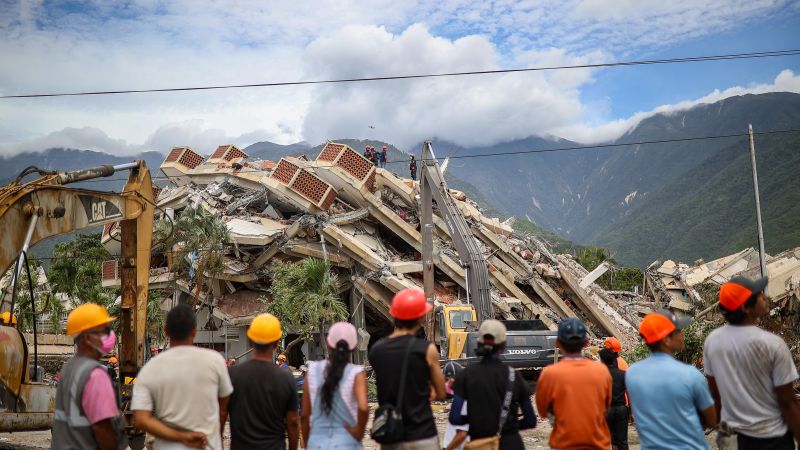

Finding people buried under collapsed buildings is difficult, painstaking work and requires coordinating many different specialist teams from all around the world.
First, in the hours immediately after earthquakes strike, surveys are carried out to assess the damage, establish priorities, estimate resources required and identify any hazards, in line with protocol laid out by the International Search and Rescue Advisory Group, which coordinates similar efforts. US helicopters have helped with this stage in Venezuela, according to US Southern Command.
Plans to divide damaged areas into sectors are then drawn up to better organize rescue teams, according to the group’s guidelines.
After that, according to the group, rescue workers identify where they think people are likely to have survived and focus their priorities there. They will speak to locals for information on victims and building layouts, work out escape routes and attempt to identify pockets within the rubble where people might be, listening, like in La Guaira, in near-total silence for any sign of life.
Specially trained dogs are crucial for finding survivors; they and their handlers are crawling under broken beams and into tight spaces in the buildings destroyed by these earthquakes. Technology plays its part too. “We go in with these micro drones, they call them cockroach drones, that help us find people in the buildings,” UN aid chief Tom Fletcher told the BBC Saturday.
But even the most detailed plans can run into problems on the ground when they are enacted.
Venezuelans with family members still missing are expressing their frustration at the lack of heavy machinery helping teams move the huge amounts of debris.
At the scene of one collapsed building, industrial engineer Alejandro Serrano told Reuters there was a “strong smell of death” and that machine operators who had pledged to help clear the rubble have yet to show up.
CNN’s Stefano Pozzebon, Max Saltman, Jessie Yeung, Laura Paddison and Sophie Tanno contributed reporting.

