

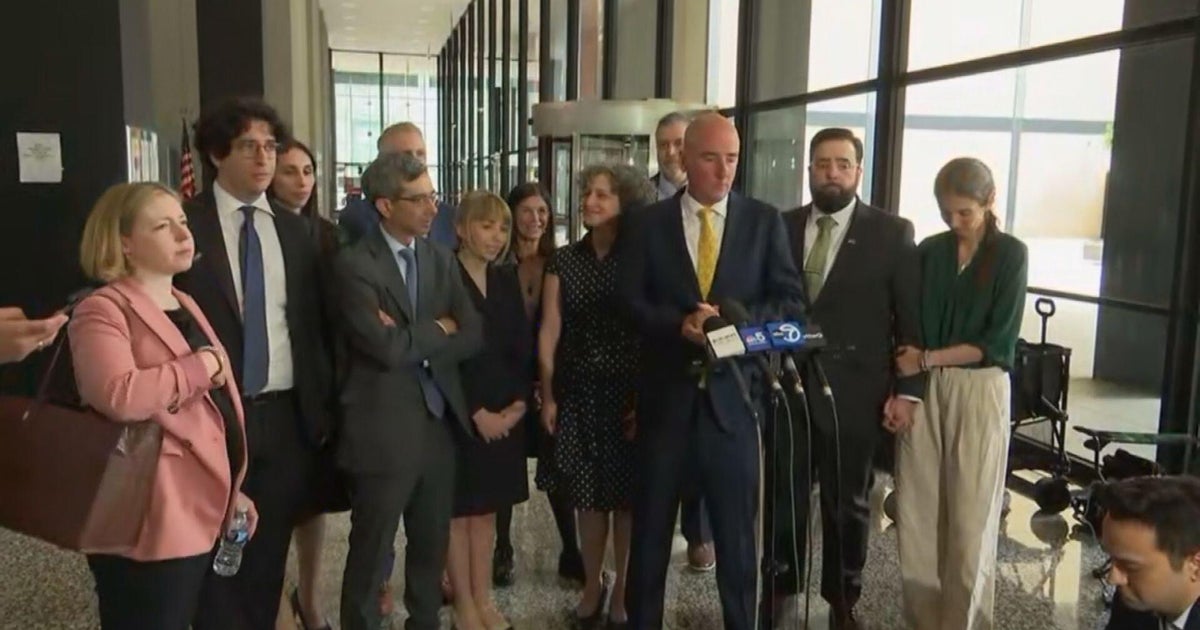
Federal prosecutors in Chicago have dismissed all charges against the four remaining members of the so-called “Broadview Six,” a group of protesters who were arrested outside the U.S. Immigration and Customs Enforcement facility in Broadview last fall.
Defense attorneys said prosecutors were forced to drop the case because of “significant errors” in the grand jury process.
U.S. Attorney Andrew Boutros said during a Thursday afternoon hearing that the decision to dismiss charges was due to improper handling of the grand jury proceedings by the lead prosecutor in the case. A rare federal trial for misdemeanor charges that had been scheduled to begin next week was canceled, after prosecutors agreed to dismiss the charges without prejudice, meaning they cannot be refiled.
Boutros announced the decision to dismiss the remaining charges in court following a closed-door meeting over redacted grand jury transcripts. He told U.S. District Judge April Perry he was unaware until recently of the alleged misconduct, including a prosecutor meeting with a grand juror outside proceedings and other jurors who disagreed with the case being dismissed and prevented from participating. Boutros did not dispute the allegations, saying the conduct was upsetting and the reason the case was being dismissed.
“No one acted with the intent to mislead your honor, and I think that they were following your order to give the law,” Boutros said.
During a closed-door hearing on the redacted grand jury transcripts, Perry told federal prosecutors she was “incredibly shocked by the redactions that were made,” according to a transcript of the hearing that was made public Thursday evening.
“I have read hundreds, if not thousands, of grand jury transcripts involving prosecutors who are the most junior of prosecutors to several U.S. Attorneys who appeared before the grand jury. I have never seen the types of prosecutorial behavior before a grand jury that I saw in those transcripts.”
Perry also said it was “problematic” that it appeared prosecutors redacted the transcripts in an attempt to conceal what happened during grand jury proceedings.
“Mistakes happen. They happen to all of us. But as I tell my children, you own it. You admit to it. You apologize for it, and you move on. What you do not do is hide it.”
Boutros, who was appointed by the Trump administration last year, declined to comment further Thursday through a spokesman.
The case, slated to go to trial next week, is among the most high-profile cases out of the crackdown that rippled across the nation’s third-largest city and suburbs last year. It is also the latest example of how the Justice Department has struggled to prosecute people accused of assaulting or hindering federal officers while protesting President Donald Trump’s immigration crackdown.
Lawyers for the defendants had argued for federal prosecutors to submit the unredacted transcript of the three grand jury sessions that led to the indictment in October 2025 to be given to the judge to review.
A grand jury indicted the original six defendants on a count of felony conspiracy for their involvement in a protest in late September 2025 outside the Broadview facility.
Prosecutors alleged they surrounded an immigration agent’s van with other protesters at a federal facility in the Chicago suburb of Broadview, which was central to the Trump administration’s aggressive operation.
Federal prosecutors dropped all charges against two of the defendants in March and, in April, dropped the felony conspiracy charge against the remaining defendants, including congressional candidate Kat Abughazaleh.
“The revelations of the grand jury misconduct that led to the dismissal of the charges is sadly not surprising,” said Abughazaleh’s defense attorney Josh Herman. “This misguided case should have never been brought against Kat Abughazaleh or any of her co-defendants for exercising their protected First Amendment rights.”
Speaking after court, defense attorney Chris Parente said the actions by federal prosecutors with the grand jury “should shame every American.”
“We have a Department of Justice that hides behind the grand jury in selling these indictments against Mr. Comey, against Don Lemon, against Brian Straw and the rest of the Broadview Six, saying, ‘Hey, it’s not us, we have a grand jury, a fair and impartial grand jury,'” Parente said. “Shame.”
Parente, who was a federal prosecutor for 15 years, said he had never heard of anything as bad as the conduct in the Broadview Six grand jury sessions. He said that while he has not yet been able to review the unredacted transcripts, Judge April Perry gave a summary in court of her impressions. She said she had reviewed thousands of pages of grand jury transcripts in her career and had never seen anything worse than what she saw in these pages.
Parente said during the grand jury sessions, prosecutors used vouching, which he called a “101 no-no for any prosecutor,” kicked out grand jury members who disagreed with them, did not disclose that a No True Bill – which indicates no indictment – had been returned to either the defense or the public. Parente also said that after receiving the No True Bill from one grand jury, they re-presented their case after excluding grand jurors who disagreed with them. The grand jury then returned a True Bill to indict the “Broadview Six.”
Parente also said that while Judge Perry thought only 30 lines in the transcript had been redacted, prosecutors actually left out entire pages and never informed her.
Parente did credit Boutros for agreeing to drop the charges, saying this is the second time he “made the tough decision to dismiss a high-profile case.”
“I just wish he wouldn’t try them in the first place,” Parente added.
Despite objections from the Chicago Tribune, Chicago Sun-Times and other news media outlets, Perry closed part of the hearing to the public because of the discussion of grand jury proceedings, which are kept secret.
The others charged were Andre Martin, who was on Abughazaleh’s campaign staff; Oak Park village trustee Brian Straw; and Michael Rabbitt, a Democratic committeeperson. Each faced a single misdemeanor count of forcibly impeding a federal agent.
After criticizing prosecutors’ handling of the grand jury transcripts, Perry also floated the idea of a separate hearing on possible sanctions against the U.S. Attorney’s Office for prosecutorial misconduct and ethical violations.
She also told defense attorneys they might be entitled to a hearing on whether the case against the defendants was a matter of “vindictive prosecution.”
Parente said he will make a motion for sanctions for their clients so they can get their legal fees covered. In any hearings over those sanctions, he expects prosecutors to testify in open court regarding their conduct, and the defense will be able to cross-examine them.
He also said they plan to file a claim with the Department of Justice’s new “anti-weaponization” fund for financial relief for their clients.
Brian Straw, an Oak Park village trustee and defendant, said he was relieved to be exonerated, but said fighting the charges was “never just about me and my co-defendants.”
“It’s about our First Amendment Rights, about having a justice system that serves the interest of justice and the public, not the whims of those in power,” he said.
Abughazaleh also spoke after court, saying she didn’t expect the charges to be dismissed on Thursday and was relieved they were. She also said demonstrating that their prosecution was unjust was the point all along.
“All of us are normal people, and we have been subjected to hundreds of thousands of dollars in legal fees and immeasurable stress,” she said. “The point is financial and psychological torture. That’s what this government is trying to do.”
Boutros did not speak after court on Thursday. CBS News Chicago reached out to the U.S. Attorney’s Office, which said it does not have a comment beyond what was said in court.
The case is not the first time during the Trump administration that prosecutors have faced scrutiny over their conduct before grand juries.
In November, for instance, a federal judge in Virginia accused the Justice Department of having engaged in a “disturbing pattern of profound investigative missteps” in the process of securing an indictment against former FBI Director James Comey.
Those problems, a magistrate judge wrote, include “fundamental misstatements of the law” by a prosecutor to the grand jury that indicted Comey in September, the use of potentially privileged communications during the investigation and unexplained irregularities in the transcript of the grand jury proceedings.
The case was later dismissed after a judge determined that the prosecutor who filed the false statements prosecution was illegally appointed. Comey in April was newly indicted over a social media photo of seashells arranged on a beach that officials said constituted a threat against Trump.
Capitol News Illinois and the Associated Press contributed to this report.

