


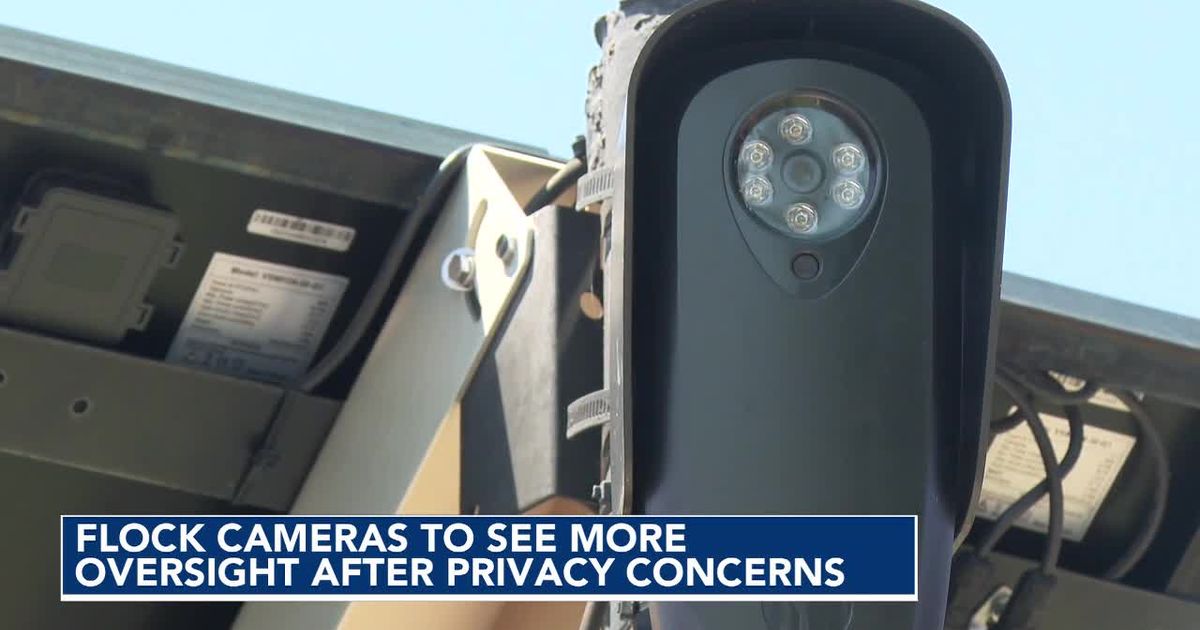
Flock Safety, creator of license plate camera readers, is adding new safegaurds to its technology after receiving backlash regarding privacy concerns and overreach of police. These software changes aim to prevent misuse of the system.
The Atlanta-based company says its cameras are designed to
help police locate missing people, identify stolen vehicles and track suspects
in criminal investigations. The company said in a video statement on Thursday the cameras helped solve cases that involved 1,000 missing people and 20,000 stolen cars in the month of July.
Still, critics have concerns about how broadly
the data can be searched and whether officers have enough oversight when
accessing it.
Flock CEO Garrett Langley announced Thursday that several
safeguards that were previously optional will become mandatory for law
enforcement customers by Jan. 1.
Under the changes, every law enforcement customer will be
required to use an auditing system designed to detect unusual searches. If
activity is flagged, a user can be locked out while the search is reviewed.
Officers will also be required to connect searches to a specific criminal case.
Flock is also shortening its standard data-retention period
from 30 days to seven days. Information could be retained longer when it is
preserved as evidence connected to an active case.
In the matter of weeks, two North Carolina officers were accused of using the cameras to stalk people.
“If we’re going to build tools this powerful, we have an
obligation to help protect the public from the small number of officers that
misuse them,” Langley said.
The company says the cameras do not provide live video,
cannot record conversations or transcribe spoken words and instead capture
short recordings and still images. Flock also says it will not sell its data to
third parties, add facial recognition to the system or weaponize its drones.
Langley characterized those limits as necessary safeguards
for a technology with significant investigative power.
“If you sell a power, you owe the public the guardrails,”
Langley said.
Some people in downtown Raleigh told WRAL they were not
aware cameras like Flock’s were operating around them, like one on Hillsborough Street.
“I was actually shocked,” said one student who lives near a
camera. “I live not too far down.”
Another person walking downtown, Matt Garrett, said the
collection of vehicle data made him uncomfortable.
“It kinda creeps me out just because it’s collecting data
and you’ve done nothing wrong … hopefully,” Garrett said.
Langley is also calling on state lawmakers to go beyond
company policy by requiring law enforcement agencies to audit use of the
technology and imposing stronger penalties for officers who misuse it.

